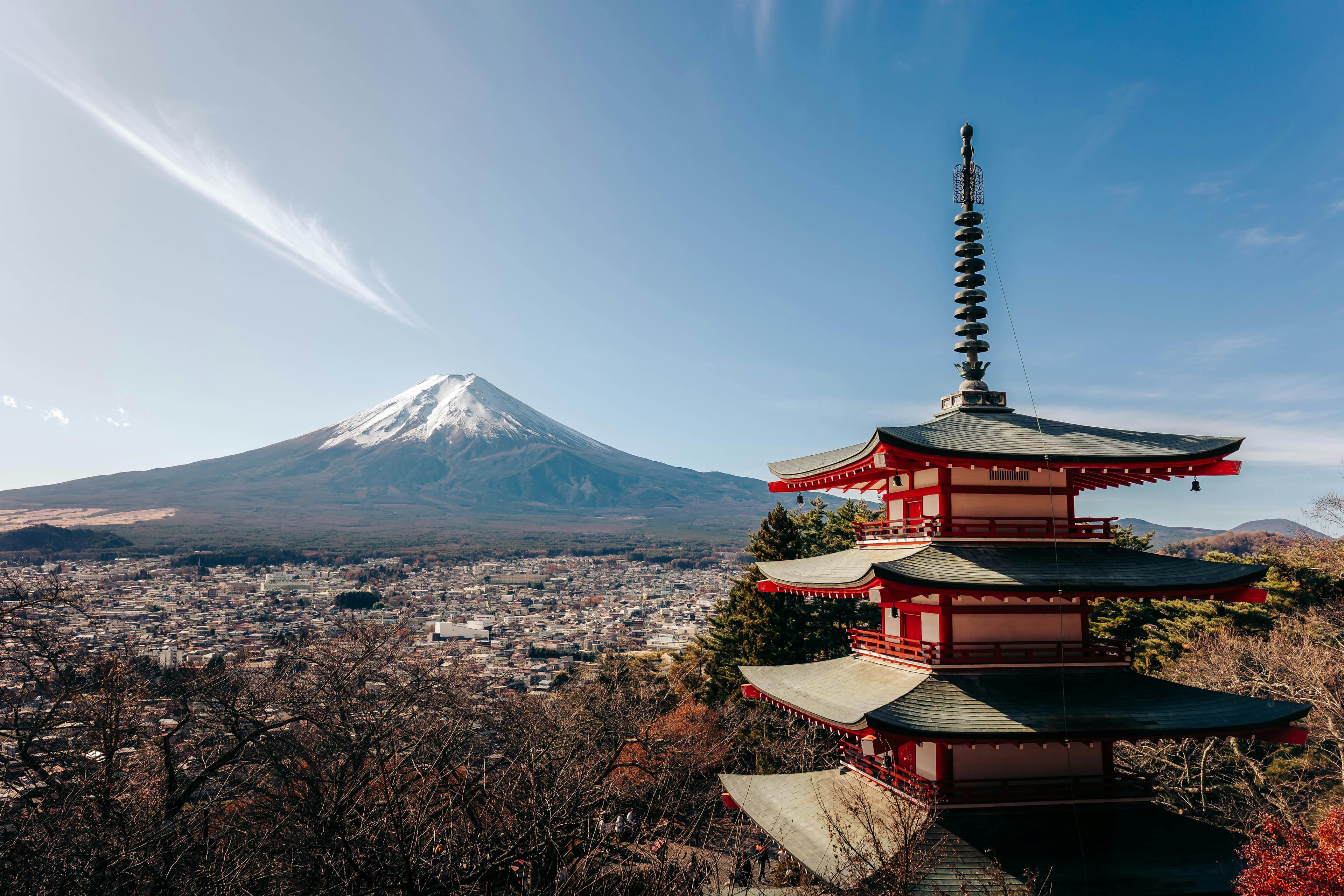
Japan refines. Thailand intensifies. Both are masterpieces — built on opposite philosophies of how to live.
One nation spent 250 years in Edo-period isolation (1603-1868) perfecting tea ceremonies, kaiseki, woodblock printing, and the kind of obsessive craftsmanship where a single ramen bowl takes 20 years to master. The other built its identity through constant trade — the only Southeast Asian country never colonized — blending Indian, Chinese, Khmer and Malay influences into a sensory firehose of pad thai, Theravada Buddhism, longtail boats, and tuk-tuks. The Japan vs Thailand decision is not "which is better." Its which philosophy of travel matches who you are right now. This guide gives you the verified 2026 numbers, the cultural depth, and the honest verdict by traveler profile.
Skip 8 hours of research. Get a Worth-It Score for both in 30 seconds.
Get Your Asia Verdict →30 seconds · 100% real data · No sponsored opinions
Quick Answer
Japan vs Thailand: the short answer
Is Japan or Thailand cheaper?
Thailand is significantly cheaper — roughly 50-66% less across every budget tier. Mid-range travelers spend about $60-100/day in Thailand versus $140-230/day in Japan. Backpackers: $25-40/day in Thailand versus $75-100/day in Japan.
Which is better for a first trip to Asia?
Thailand — it is easier, cheaper, and more forgiving. Lower prices buffer beginner mistakes, English is common in tourist zones, and the service culture is warm. Save Japan for a second trip when you appreciate refinement over savings.
So which should you choose?
Choose Thailand for warm weather, beaches, low prices and fast sensory immersion. Choose Japan for refined culture, flawless efficiency, and once-in-a-lifetime craftsmanship. Most travelers pick one per trip — they reward different mindsets. Full breakdown by traveler profile below.
At a Glance
Japan vs Thailand: 13 Categories Compared
| Category | ⛩ Japan | 🌴 Thailand |
|---|---|---|
| Daily cost (mid-range) | $140-230/day | $60-100/day — 50-57% cheaper |
| Daily cost (backpacker) | $75-100/day | $25-40/day — 60-66% cheaper |
| Daily cost (luxury) | $330-650+/day | $200-400/day |
| Visa for US/EU citizens | 90 days visa-free | 60 days visa-free (extended 2024) |
| New 2026 fees | Exit tax tripled to ¥3,000 | TDAC mandatory, free, online |
| Best for | Refinement, infrastructure, depth | Beaches, food intensity, value |
| Days needed minimum | 10-14 days | 7-10 days |
| Climate | Four seasons, sakura + autumn | Tropical, dry/hot/monsoon |
| Best season | Late March-April, mid-November | November-February |
| Language barrier | Moderate (English in tourist zones) | Lower (English widely spoken) |
| Safety rating | Among safest globally | Generally safe, watch scams |
| Beach quality | Limited (Okinawa only) | World-class (Phi Phi, Krabi) |
| Currency 2026 | 158-160 JPY/USD (yen weak) | 34-36 THB/USD (stable) |
Sources: BudgetYourTrip 2026 verified data, Tourism Authority of Thailand, Japan National Tourism Organization, cross-referenced May 2026
The Money Question
Real Daily Costs: Thailand 50-66% Cheaper
According to BudgetYourTrip 2026 cross-referenced data, the cost gap between Japan and Thailand is the single biggest factor in this decision. Backpackers spend $25-40 per day in Thailand versus $75-100 per day in Japan — a 60-66% difference. Mid-range travelers see the same gap: $60-100/day Thailand versus $140-230/day Japan.
The breakdown: mid-range Bangkok hotels run $40-80/night versus Tokyo $95-160/night. Street food in Bangkok averages $1-3 per meal versus Japan konbini meals at $5-8 or sit-down restaurants at $12-20. Local transport is comparable in city centers ($1-3 per trip both countries) but intercity transport diverges sharply — Tokyo to Kyoto Shinkansen costs $90 versus Bangkok to Chiang Mai overnight train at $25-40.
One important nuance for 2026: the Japanese yen sits at 158-160 JPY/USD, roughly 25-30% weaker than 5 years ago. This means Japan is more affordable today than it has been in over a decade for USD holders. Even so, Thailand maintains its decisive price advantage at every tier.
A 14-day mid-range Japan trip costs $1,960-3,220 in daily expenses (excluding international flights). The same 14 days in Thailand: $840-1,400. The $1,000-1,800 difference is enough to fund an additional 7-10 days in Thailand or an entire second short trip somewhere else. This is the central tradeoff: Japan delivers more refinement per day, Thailand delivers more days per budget.
Quick reality check
Japan averages $140-230/day mid-range. Thailand $60-100/day. Vietnam delivers similar quality at $50-75/day. Is the premium worth it for YOUR profile?
Compare All Asia →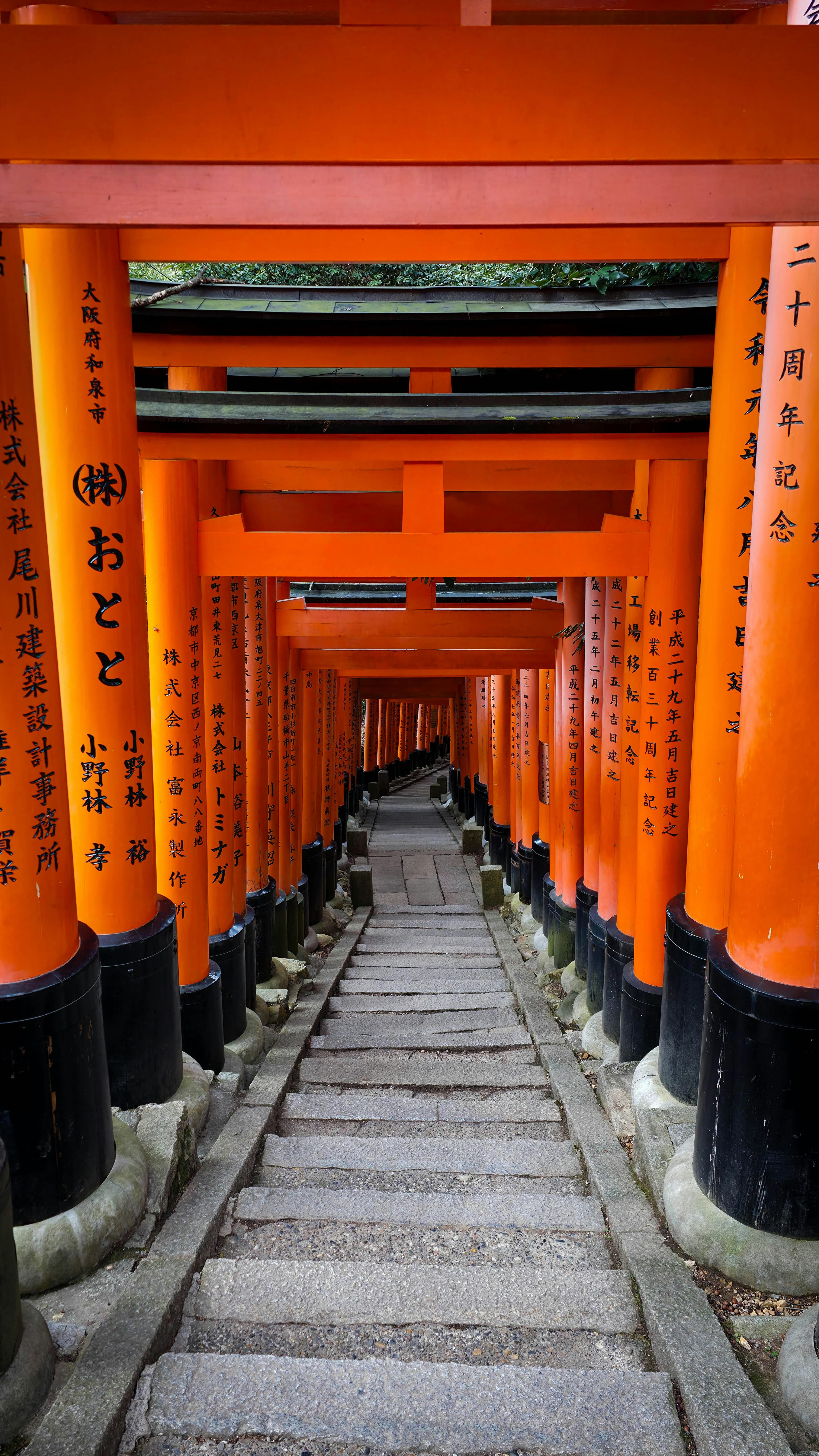
Japan: The Refined Civilization
Japan is the result of 250 years of self-imposed isolation. The Edo period (1603-1868) sealed the country from the outside world under the Tokugawa shogunate, allowing Japanese culture to develop in extreme depth — kaiseki cuisine, tea ceremony (chanoyu), kabuki theater, woodblock printing (ukiyo-e), zen Buddhism, and the obsessive craftsmanship known as monozukuri. When Japan reopened in 1868 (Meiji Restoration), it modernized faster than any nation in history while preserving these refined traditions. Today: 21 UNESCO World Heritage sites, 400+ Michelin stars across 10 cities, the worlds most efficient public transport, and a culture where punctuality is measured in seconds. Population 125 million on 4 main islands roughly the size of California.
Thailand: The Sensory Crossroads
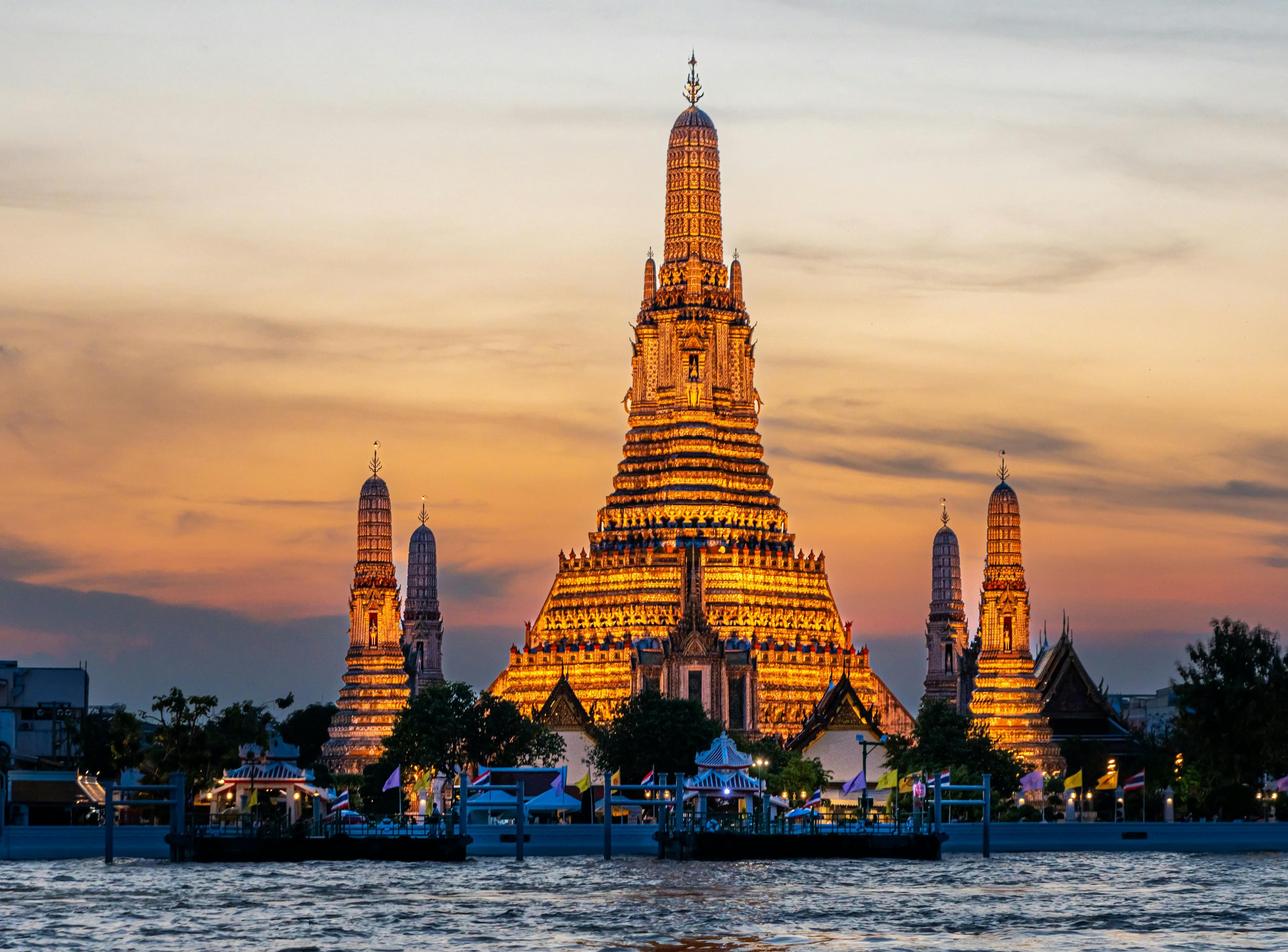
Thailand is the only Southeast Asian country never colonized by European powers — a fact that shaped its identity as a confident cultural blender rather than a passive recipient. Indian Buddhism arrived in the 3rd century BC and became Theravada Buddhism, the spiritual backbone today (94% of Thais practice it). Khmer civilization influenced the architecture (Sukhothai, Ayutthaya). Chinese trade shaped the food. Malay culture flavored the south. The result: a country where you can climb a 13th-century temple in the morning, eat the worlds best pad thai for $2 at lunch, snorkel turquoise waters at sunset, and watch a Muay Thai match at midnight — all in one day. Population 71 million, of which 11 million live in Bangkok metro. The Thai Tourism Authority recorded 35.5 million international visitors in 2024, putting Thailand among the top 10 most visited countries globally.
Honest Reframe
Japan vs Thailand is not the right question. The right question is: what do YOU need from this trip?
Both countries are world-class. Both deliver life-changing trips. The choice depends on whether you want a high-touch, refined, more expensive experience that rewards patience and attention (Japan), or a high-energy, sensory, more affordable experience that rewards spontaneity and openness (Thailand). The traveler profiles below cut through generic comparisons.
Get YOUR Personalized Verdict →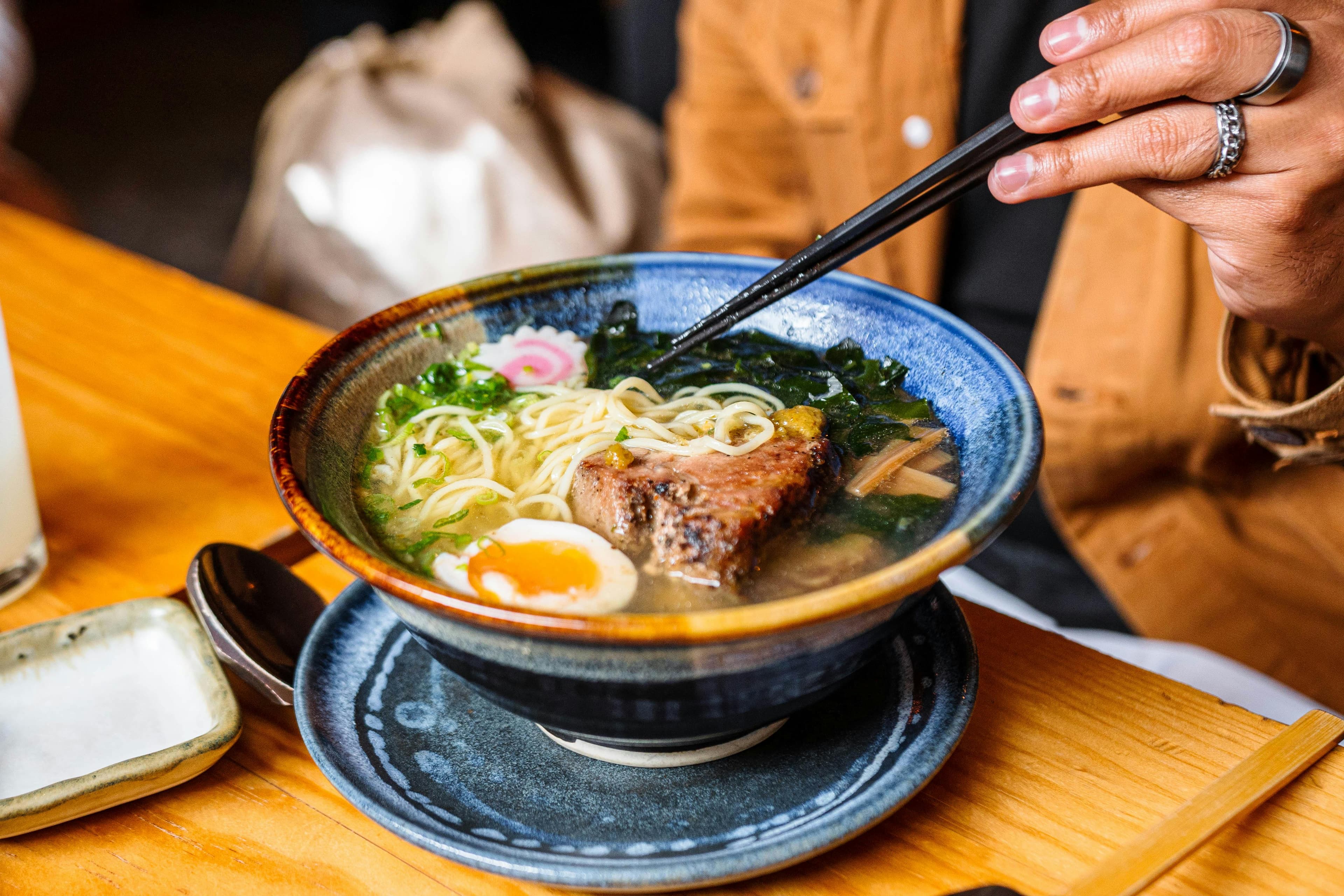
Food Culture: Kaiseki vs Pad Thai
Japan is ingredient obsession. Kaiseki cuisine, codified in the 16th century by tea master Sen no Rikyu, treats each seasonal ingredient as the star — a single grilled fish in summer, a tofu cube in winter. Sushi originated as preserved fish in 8th century Kyoto. Ramen has 4+ regional schools (Tonkotsu Hakata, Shoyu Tokyo, Miso Sapporo, Shio Hakodate). Japan has 400+ Michelin stars across 10 cities — Tokyo alone holds 200+, more than Paris and New York combined. Average meal cost: $5-10 konbini, $15-25 ramen shop, $40-80 quality sushi, $150-300 kaiseki.
Thailand is layered intensity. Every dish balances 5 flavors — sweet, sour, salty, bitter, spicy. Pad thai was invented in the 1930s as a national dish. Tom yum, som tam, green curry, massaman, khao soi all use distinct herb combinations (galangal, kaffir lime, lemongrass) found nowhere else. Bangkok holds 28+ Michelin stars; the rest of the country adds 7+ more. Street food is the cultural backbone — UNESCO is currently evaluating Thai street food culture for Intangible Heritage status. Average meal cost: $1-3 street food, $5-10 sit-down, $20-40 nice restaurant, $100-200 high-end.
🛂 Logistics 2026 — Updated May
Visa, TDAC & Exit Tax: What Changed in 2026
Most travel guides are running outdated 2024-2025 data. Heres what actually matters for 2026 trips, verified May 2026.
Japan Entry Rules
Visa-free 90 days for US, EU, UK, Canada, Australia, NZ citizens. No application needed.
NEW 2026: Exit tax tripled from ¥1,000 to ¥3,000 (~$20 USD), added automatically to airline tickets.
Coming 2028: JESTA electronic authorization (similar to US ESTA) becomes mandatory. Pilot phase launches late 2026 — voluntary for now.
Thailand Entry Rules
Visa-free 60 days for 93 nationalities (extended from 30 in mid-2024). Includes US, EU, UK, Canada, Australia.
MANDATORY 2025+: TDAC (Thailand Digital Arrival Card) — free, completed online up to 72 hours pre-arrival. Replaces paper TM6 form.
Update 2026: The proposed 300 baht entry fee remains POSTPONED — not in force as of May 2026.
Money & Currency
Japan 2026: 158-160 JPY/USD (yen weak — favorable for USD/EUR holders). Cash still preferred outside Tokyo.
Thailand 2026: 34-36 THB/USD (stable). Cards widely accepted in cities, cash needed for street food and rural areas.
Tip: Wise/Revolut work in both countries. Avoid airport currency exchange (worst rates by 5-8%).
The Honest Verdict
Who Should Choose Japan, Who Should Choose Thailand
First-time Asia traveler
ThailandChoose Thailand for your first Asia trip. Lower prices buffer mistakes (a wrong tour booking in Thailand costs $30, in Japan $150). English is more common in tourist zones. The food is more accessible to Western palates initially. Service culture is warmer and more forgiving. Save Japan for trip number 2 or 3 when you appreciate refinement and can navigate Asian travel confidently.
Bangkok 2-Hour Walking Tour From €19 →Foodie obsessed (highest priority is food)
Tied — go for both, but if forced to pick: JapanFor ingredient quality and refinement: Japan wins. 400+ Michelin stars, sushi at its origin, ramen regional schools, kaiseki tradition, kobe wagyu. For variety, intensity, and dollar value: Thailand wins. The worlds densest street food culture, $2 pad thai that beats $30 versions abroad, layered flavor combinations using herbs (galangal, kaffir lime, lemongrass) impossible to source fresh outside SE Asia. If you can only pick one, choose Japan for ingredient depth — but you will regret skipping Thailand.
Tokyo Tsukiji Market Food Tour From €13 →Cultural depth seeker (history, art, craft)
JapanChoose Japan. The combination of preserved tradition (Kyoto has 1,600 Buddhist temples and 17 UNESCO sites in 827 km²), living craft cultures (kintsugi, calligraphy, ikebana, tea ceremony), and the philosophy of monozukuri (craftsmanship) creates depth Thailand cannot match. Thailand has incredible Buddhist heritage (Sukhothai, Ayutthaya, Wat Pho) but the depth-per-square-kilometer in Japan, especially Kyoto and Nara, is unmatched in Asia.
Kyoto Tea Ceremony Experience →Budget traveler (under $80/day)
ThailandChoose Thailand. Decisively. At $80/day in Thailand you eat well at sit-down restaurants, stay in 3-star hotels, take taxis, and do 1-2 paid activities daily. At $80/day in Japan you sleep in capsule hotels or hostels, eat konbini meals, take only public transport, and skip most paid attractions. Same number on the budget line, completely different quality of trip. If your budget is below $100/day, Japan will feel restrictive and Thailand will feel generous.
Bangkok Budget Walking Tour From €19 →Family with kids 6-14 / Adventure seekers
Depends — Family: Thailand. Adventure: tied.For families: Thailand wins on warmer weather, beach time, elephant sanctuaries (ethical only — Elephant Nature Park Chiang Mai), island hopping by speedboat, kid-friendly food, and lower costs. Japan delivers TeamLab Planets, Disneyland Tokyo, and snow trips, but the cultural pace requires more parental management. For adventure: Thailand offers world-class rock climbing in Krabi, scuba diving Koh Tao (cheapest PADI globally), jungle trekking. Japan offers Hokkaido powder skiing, Mt Fuji climbing (July-August only), Kumano Kodo pilgrimage trail. Different adventures, both top-tier.
Phi Phi Islands Day Trip From €50 →Decision Engine
Still uncertain? Get a personalized worth-it score for your exact profile
See how Japan and Thailand rank against each other based on YOUR budget, dates, and travel style — plus we will compare against Vietnam, Bali, and Cambodia. 30 seconds, no email required to see results.
Get Your Worth-It Score →People Also Ask
Frequently Asked Questions
Is Japan or Thailand cheaper to visit in 2026?
Thailand is significantly cheaper across every budget tier. Backpackers spend $25-40/day in Thailand versus $75-100/day in Japan (Thailand is 60-66% cheaper). Mid-range travelers spend $60-100/day in Thailand versus $140-230/day in Japan (50-57% cheaper). Luxury travelers see Thailand at $200-400/day versus Japan at $330-650+ (40-50% cheaper). The yen weakness (158-160 JPY/USD in 2026) makes Japan more affordable for USD holders than 5 years ago, but Thailand still wins decisively on price across all categories.
Should first-time Asia travelers choose Japan or Thailand?
Both work, but for different reasons. Japan offers efficient infrastructure, near-zero language barriers in tourist zones, exceptional safety, and refined cultural depth — ideal if your priority is comfort plus culture. Thailand offers warmer weather, friendlier service culture, faster sensory immersion, and dramatically lower prices — ideal if you want maximum experience per dollar. Most first-timers split: 7-10 days in one or the other, not both, since they require different mental modes. If unsure, choose Thailand for first Asia trip (easier, cheaper, more forgiving) and save Japan for trip number 2 when you appreciate refinement.
How long do I need in Japan vs Thailand?
Japan needs 10-14 days minimum to cover Tokyo, Kyoto, Osaka plus one secondary destination (Hakone, Hiroshima, or Takayama). Less than 10 days feels rushed because each city demands 3-4 days. Thailand can be done in 7-10 days covering Bangkok, Chiang Mai, plus southern islands (Phi Phi, Krabi, or Phuket). Thailand allows shorter trips because cities require less time per stop. For a single 14-day Asia trip, Thailand alone delivers more variety than Japan alone — but Japan delivers more depth.
What is the visa situation for Japan and Thailand in 2026?
Japan: 90 days visa-free for US, EU, UK, Canada, Australia citizens. Exit tax tripled in 2026 from ¥1,000 to ¥3,000 (~$20). The JESTA electronic authorization is in pilot phase late 2026 and becomes mandatory in 2028. Thailand: 60 days visa-free for 93 nationalities (extended from 30 days in mid-2024). The TDAC (Thailand Digital Arrival Card) is mandatory since May 2025 for all travelers — free, completed online 72 hours pre-arrival. The proposed 300 baht entry fee remains POSTPONED in 2026 (not in force). Overstay penalty: 500 baht per day, max 20,000 baht.
Is Japan safer than Thailand for solo travelers?
Japan is statistically among the safest countries in the world — violent crime is rare, lost wallets routinely returned, solo female travel is unproblematic at any hour. Thailand is generally safe for tourists in major destinations but requires more situational awareness: scams targeting tourists (gem shops, tuk-tuk overcharges, jet ski deposits), petty theft in beach areas, and traffic accidents (Thailand has one of the highest road death rates in Asia). Both are safer than most Western capitals for the average traveler. Solo female travelers report Japan as the most comfortable Asian destination; Thailand as comfortable but requiring street smarts.
Japan vs Thailand for food: which has better cuisine?
Different food cultures, both world-class. Japan offers refined, ingredient-focused cuisine — kaiseki (multi-course imperial), sushi at its origin, ramen regional variations (Tonkotsu Hakata, Shoyu Tokyo, Miso Sapporo), kobe wagyu, and 10 cities with Michelin guides totaling 400+ stars nationally. Thailand offers bold, layered street food — pad thai, tom yum, green curry, som tam, and the highest density of street food per capita in Asia. Bangkok holds 28+ Michelin stars. Japan wins for refinement and ingredient quality. Thailand wins for variety, intensity, and accessibility — a $3 pad thai from a Bangkok cart often outperforms $30 versions in Western cities.
When is the best time to visit Japan vs Thailand?
Japan: late March to early April (cherry blossom, sakura) and mid-November (autumn foliage, koyo). Spring temperatures 13-22°C, autumn 10-20°C. Avoid June-July rainy season and August humidity (32-35°C). Thailand: November to February (cool dry season). Temperatures 24-32°C with low humidity. Avoid March-May (hot season, 35-40°C in Bangkok) and June-October (monsoon, especially August-September on west coast). Both peak seasons mean 2x prices and 3x crowds. Shoulder seasons: May and October for Japan, March and early November for Thailand offer 70-80% of the experience at 50-60% of the cost.
Japan or Thailand for couples and honeymoons?
Thailand wins for traditional honeymoon (beaches, overwater villas, romantic dinners under $100, sunset longtail boat rides in Krabi or Phi Phi). Japan wins for unconventional honeymoon (ryokan stays with private onsen, traditional kaiseki, cherry blossom season, autumn foliage in Kyoto). Budget difference is significant: 10-day Thailand honeymoon $2,500-4,500 per couple including flights from Europe; 10-day Japan honeymoon $5,000-8,500. Thailand for warm weather lovers and beach romance. Japan for cultural depth and seasonal beauty.
Can you combine Japan and Thailand in one trip?
Yes, but it requires 21+ days minimum to do justice to both. Bangkok-Tokyo flight time is 6-7 hours, costing $300-500 round trip if booked separately. Recommended split: 10 days Japan (Tokyo 4 nights, Kyoto 3, Osaka 2, plus 1 transit) followed by 10 days Thailand (Bangkok 3, Chiang Mai 3, southern islands 4). Climate logic: do Japan first if traveling November-March (cool weather), Thailand first if April-October (avoid Japan rainy season). Many travelers prefer separate trips because the two require different mental modes — Japan demands focus and patience, Thailand rewards spontaneity and openness.
Japan vs Thailand for adventure and outdoor activities?
Thailand wins for tropical adventure: rock climbing in Krabi (world-class limestone routes), scuba diving in Koh Tao (cheapest PADI certification globally at $300-400), elephant sanctuaries in Chiang Mai, jungle trekking, and island hopping by speedboat. Japan wins for unique outdoor experiences: hiking the Kumano Kodo pilgrimage trail (UNESCO World Heritage), skiing in Hokkaido (the best powder snow in Asia), Mount Fuji climbing season July-August, hot spring (onsen) culture in remote mountain villages, and the 88-temple Shikoku Pilgrimage. Thailand offers warmer-weather adventure year-round; Japan offers unique seasonal experiences impossible elsewhere.
Continue Exploring
More Asia Comparisons
Where to Stay
Find Your Hotel — Japan or Thailand
⛩ Tokyo, Japan
Stay in Shibuya for nightlife, Shinjuku for accessibility, Asakusa for traditional vibe, or Ginza for luxury. Mid-range $95-160/night.
Tokyo Hotels →🌴 Bangkok, Thailand
Stay in Sukhumvit for nightlife and shopping, Silom for business, Khao San for backpackers, or Riverside for luxury. Mid-range $40-80/night.
Bangkok Hotels →You now have the verified picture.
Japan delivers refinement at premium cost. Thailand delivers intensity at fraction of the price. Both are world-class — the question is which philosophy of travel matches who you are right now.
Get your verdict in 30 seconds. The Decision Engine compares Japan and Thailand against your specific profile — budget, travel dates, travel style — and ranks them honestly with a worth-it score.
Try the AI Decision Engine →100% real data · No opinions · No sponsored results · Always free