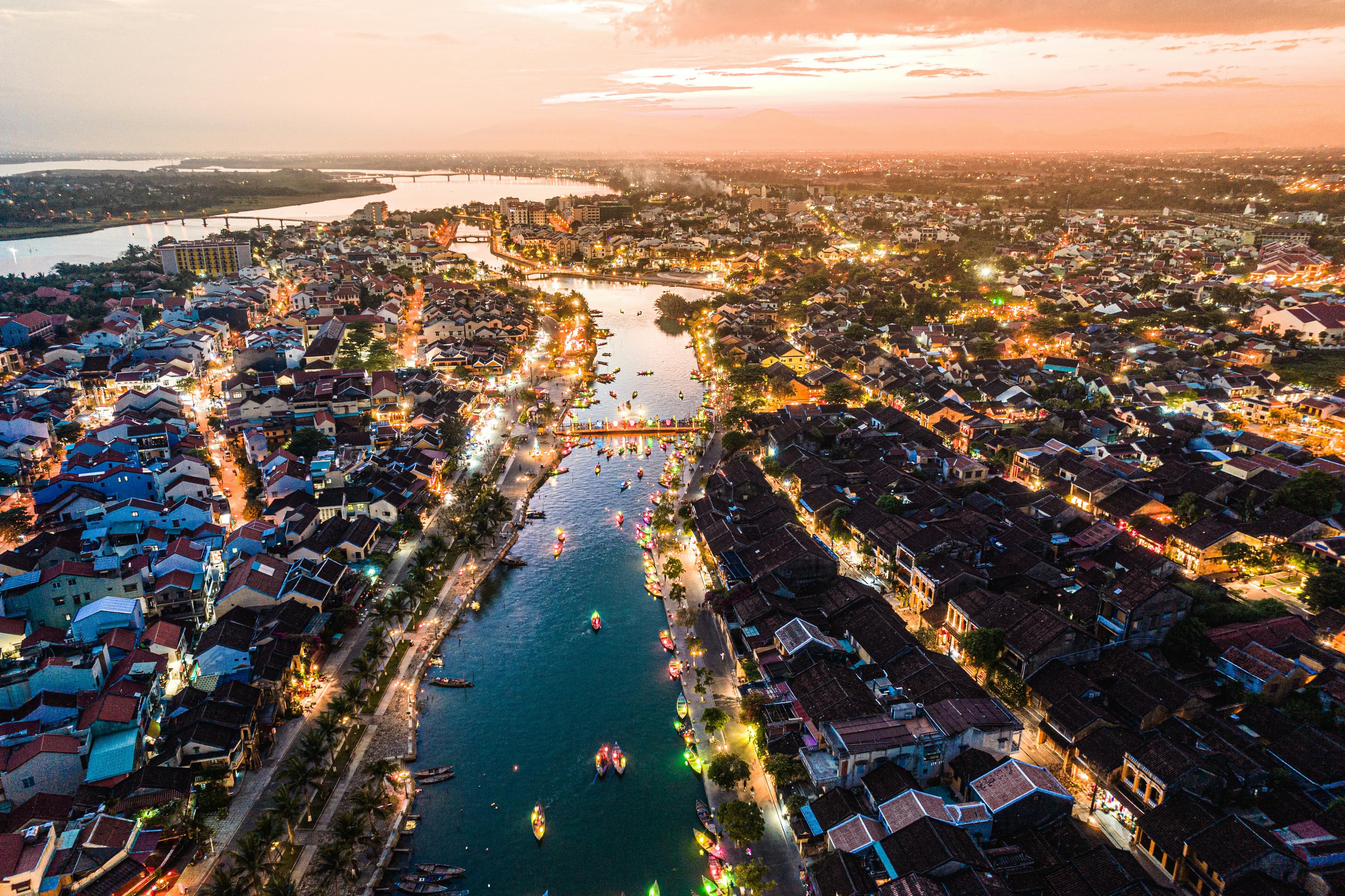
Aerial view of Hoi An Ancient Town illuminated by lanterns at night along Thu Bon River
Hoi An Travel Guide 2026

Best Things to Do
in Hoi An

7 unmissable experiences in Vietnam's ancient trading port — from UNESCO temples to lantern-making traditions

Hoi An Ancient Town is Vietnam's most enchanting UNESCO World Heritage Site — a 2000-year-old trading port where Japanese merchants, Chinese silk traders, and French colonists created Southeast Asia's most beautiful architectural fusion. This living museum beside the Thu Bon River preserves centuries-old traditions in lantern making, silk weaving, and culinary arts that defined the ancient Maritime Silk Road.

Essential Intelligence

Plan Your Visit to Ancient Faifo

🌧️ Seasonal Intelligence

Perfect Season (Feb-Apr): Dry season with mild 25°C temperatures, ideal for walking tours and lantern festivals. Low humidity, clear skies, gentle sunshine.
Hot Season (May-Aug): Hot and dry (up to 39°C), best for beach activities at Cham Islands. Long sunshine hours but wear protection.
Rainy Season (Sep-Jan): Heavy rainfall, typhoon risk Oct-Nov. Atmospheric but challenging for outdoor activities. Fewer crowds, lower prices.
Lantern Festival: Monthly on 14th lunar day. Old Town lights switched off, thousands of silk lanterns illuminate ancient streets.

🏮 Trading Port Heritage

Ancient Origins (2nd century): Founded as Sa Huynh trading post, later became Champa Kingdom's major port connecting Hindu Cham civilization to maritime trade.
Golden Age (15th-18th century): International hub where Chinese, Japanese, Dutch, Portuguese merchants created Southeast Asia's most cosmopolitan trading port.
French Colonial Era (19th century): River silting ended maritime trade, French overlooked the town, accidentally preserving its ancient character.
UNESCO Recognition (1999): World Heritage designation recognizes 1,107 preserved timber buildings representing unique cultural fusion.

📍 Local Intelligence

Old Town Entry: 120,000 VND (~$5) for 5 heritage sites. Visit 22 preserved buildings including Japanese Bridge, assembly halls.
Best Photography: Early morning (6-7 AM) or late afternoon (4-6 PM) for golden light. Lantern Festival nights for magical atmosphere.
Local Specialties: Cao Lau noodles (only in Hoi An), White Rose dumplings, Banh Mi Phuong. Try at local markets, not tourist restaurants.
Getting Around: Old Town is car-free. Walk or rent bicycles. Motorbike taxis for longer distances. River taxis available.
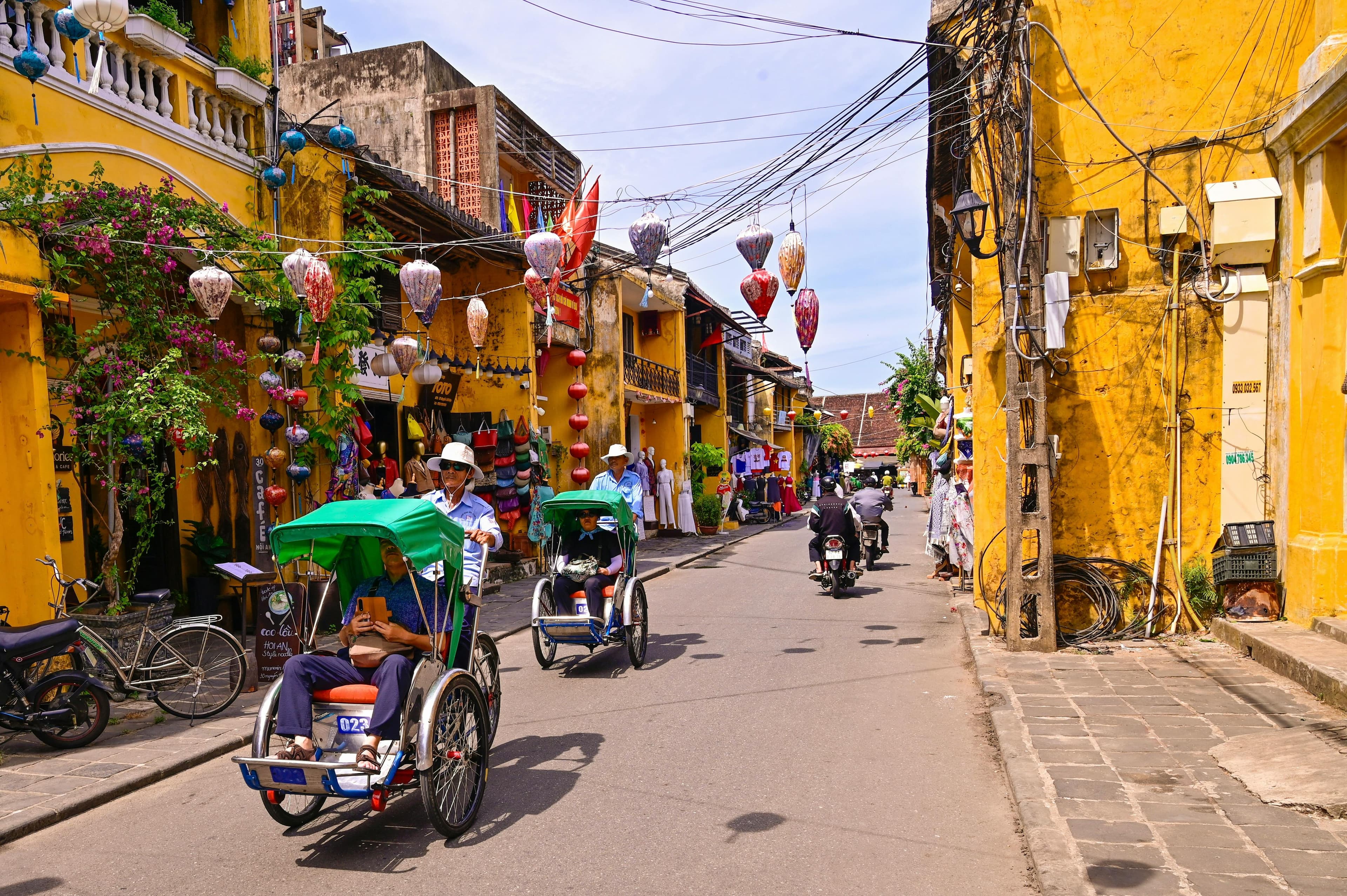
Yellow buildings and colourful lanterns lining the ancient streets of Hoi An Old Town
01
UNESCO World Heritage Site — 700 years of living history

Hoi An Ancient Town Walking Tour

Hoi An Ancient Town is Vietnam's best-preserved trading port, a UNESCO World Heritage Site where Japanese merchants, Chinese traders and French colonists all left their mark on the same yellow-walled streets. The Old Town entrance ticket costs 120,000 VND (~$5 USD) and covers 5 heritage sites of your choice from 22 options — including the iconic Japanese Covered Bridge, Tan Ky Old House and Fujian Assembly Hall. A guided walking tour unlocks the stories behind the architecture that a solo visit simply cannot.
Trading Port Heritage
The yellow walls were mandated by the Nguyen Dynasty in the 18th century as a symbol of prosperity. Each architectural style tells the story of different trading communities: Chinese assembly halls served as community centers and temples, Japanese merchants built the covered bridge to connect their quarter with the Chinese district, and French colonists added balconies and shutters. The street layout follows the original 16th-century plan designed for maritime trade.
Price
From ~$11 USD
Duration
2.5 hours
UNESCO site · 120,000 VND entrance · 22 heritage sites
Book on GetYourGuide →
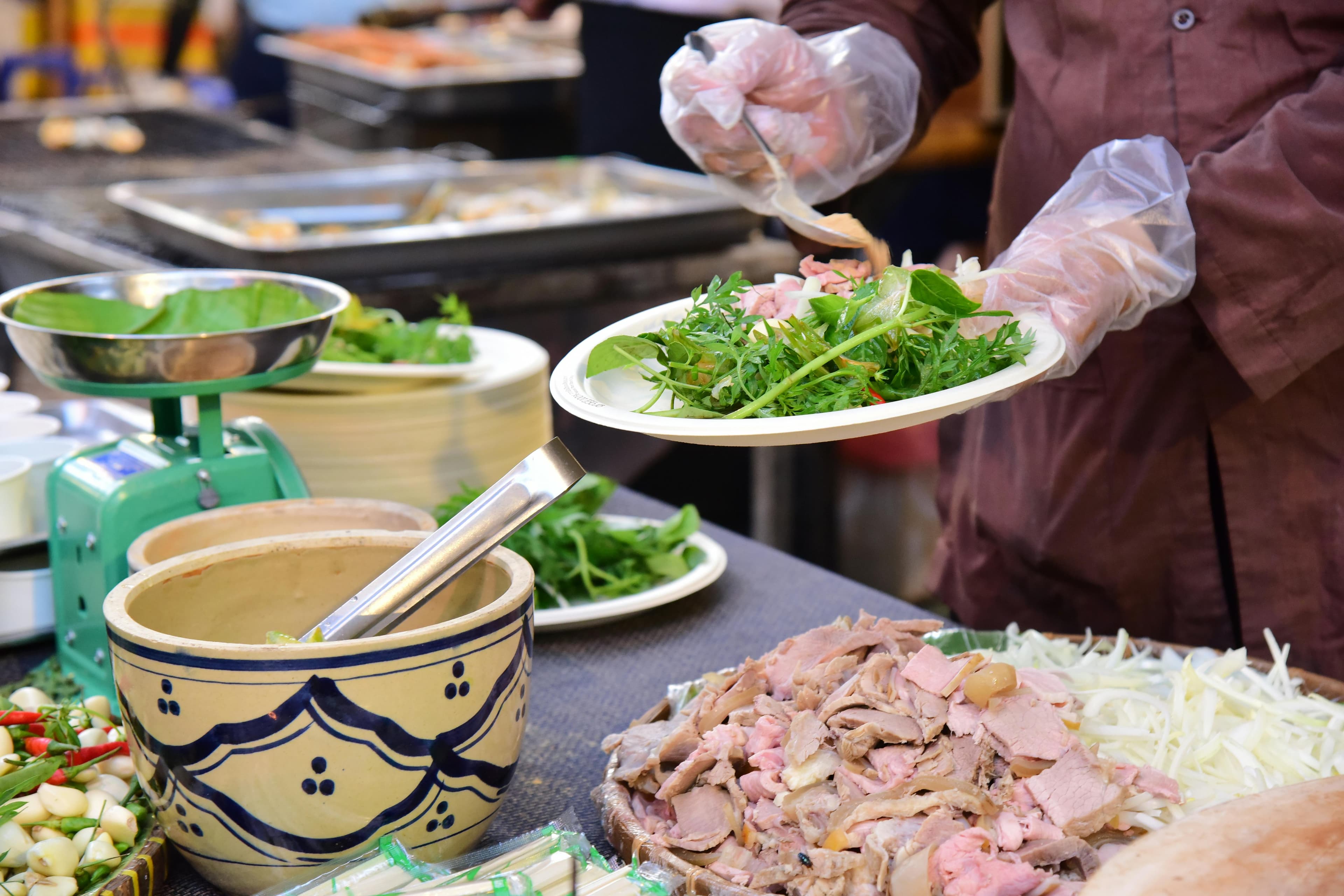
Vietnamese street food market with fresh herbs and ingredients for a Hoi An cooking class
02
Learn to cook Cao Lau, White Rose & Banh Mi from scratch

Cooking Class with Market Visit

Hoi An is the culinary capital of central Vietnam — home to dishes like Cao Lau (a noodle dish made exclusively with water from a specific local well), White Rose dumplings, and Banh Mi so good it earned its own UNESCO recognition. This cooking class starts at the Central Market where you shop for ingredients alongside locals, then moves to a riverside kitchen for hands-on cooking of 4-5 dishes. You take the recipes home. The class includes a boat trip on the Thu Bon River as part of the experience.
Trading Port Heritage
Cao Lau noodles can only be made in Hoi An using water from the Ba Le well, which filters through ancient Cham-era stones. The recipe reflects 2000 years of cultural fusion: Japanese-style thick noodles, Chinese-influenced pork preparation, and Vietnamese herbs. White Rose dumplings originated from Chinese Wontons but were adapted by local women who created their own translucent rice paper technique passed down through families.
Price
From ~$21 USD
Duration
2 hours
Market visit + 4-5 dishes + river boat included
Book on GetYourGuide →
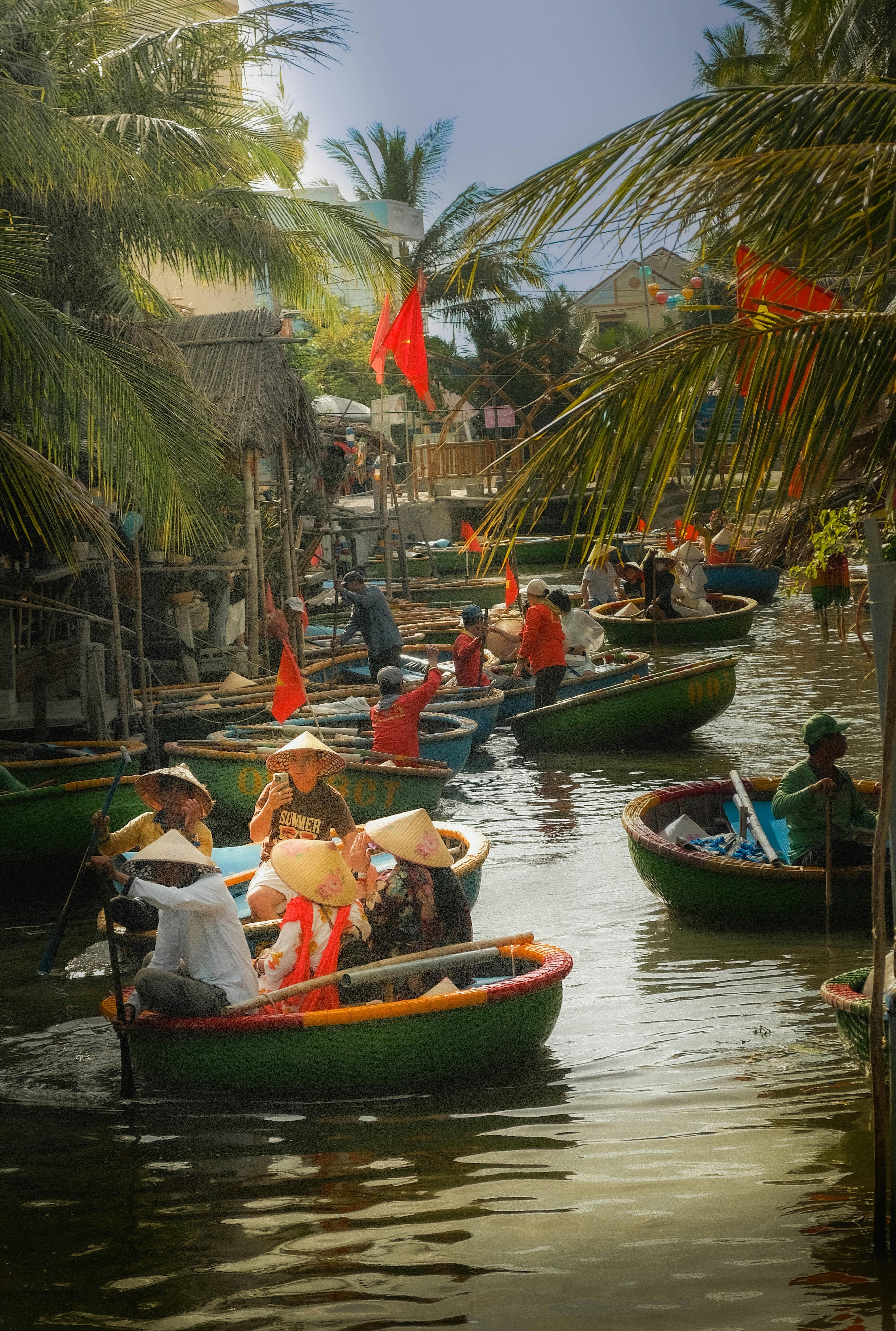
Traditional circular bamboo basket boats in the mangrove coconut forest near Hoi An
03
The most unique boat ride in Southeast Asia

Basket Boat Ride — Coconut Forest

The Cam Thanh Coconut Forest, 6km from the Old Town, is a UNESCO-protected water palm forest where locals navigate in circular bamboo basket boats — the same vessels used by fishermen for centuries. Watching a boat spinner whirl the basket 360 degrees while standing upright is genuinely one of the most memorable sights in Vietnam. The forest entrance costs 30,000 VND (~$1.20) and a basket boat ride is 120,000 VND per boat for two people. The guided tour version combines the forest with crab fishing and traditional net casting.
Trading Port Heritage
These circular boats were developed during the Vietnam War when conventional boats were restricted. Fishermen discovered that round bamboo baskets coated with buffalo dung and fish oil became waterproof vessels that could navigate shallow mangroves. The spinning technique developed as entertainment for tourists but reflects genuine boat handling skills passed through generations. The coconut forest provided shelter for Viet Cong during wartime.
Price
From ~$13 USD
Duration
2-3 hours
UNESCO water palm forest · crab fishing · net casting
Book on GetYourGuide →
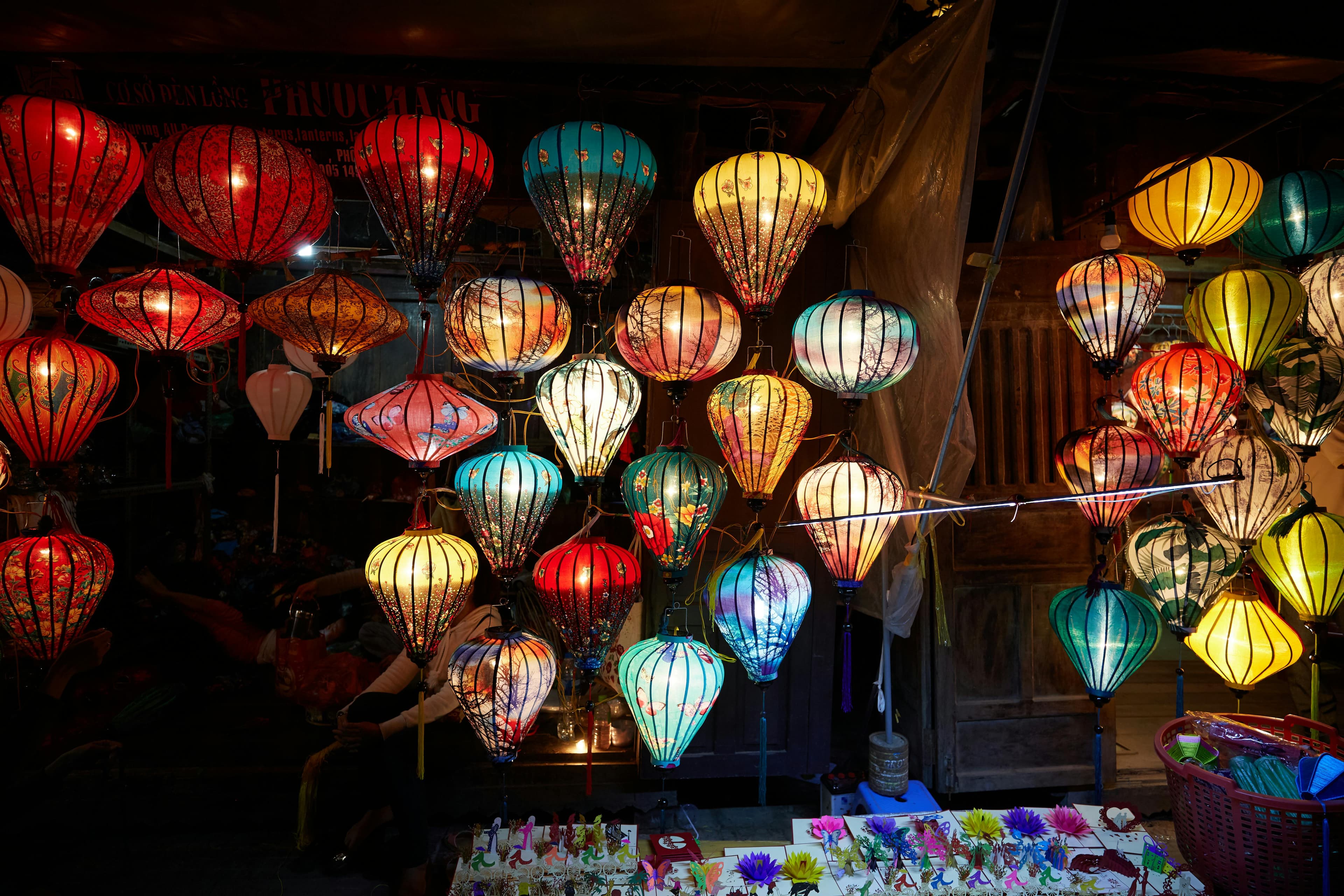
Colorful silk lanterns hanging from the ceiling in a traditional Hoi An lantern workshop
04
Create your own silk lantern like craftsmen have for 400+ years

Lantern Making Workshop

Hoi An's silk lanterns are not just pretty tourist souvenirs — they represent a 400-year-old craft tradition that began when Chinese immigrants brought silk-making skills to the port town. During the monthly Lantern Festival on the 14th lunar day, all electric lights are turned off and the Old Town glows entirely by lantern light. This workshop teaches you to make your own lantern using traditional techniques: bamboo frame construction, silk stretching, and hand-painted designs. Your finished lantern becomes a practical souvenir.
Trading Port Heritage
The lantern tradition began in the 16th century when Chinese silk merchants brought their craft to Hoi An. Different colors held meaning: red for luck and prosperity, yellow for wisdom, blue for peace, and green for health. During the Lantern Festival, locals believe that lighting lanterns honors ancestors and brings good fortune. The monthly festival coincides with full moons, creating a mystical atmosphere that transforms the ancient town.
Price
From ~$8 USD
Duration
1 hour
400-year craft tradition · take your lantern home
Book on GetYourGuide →
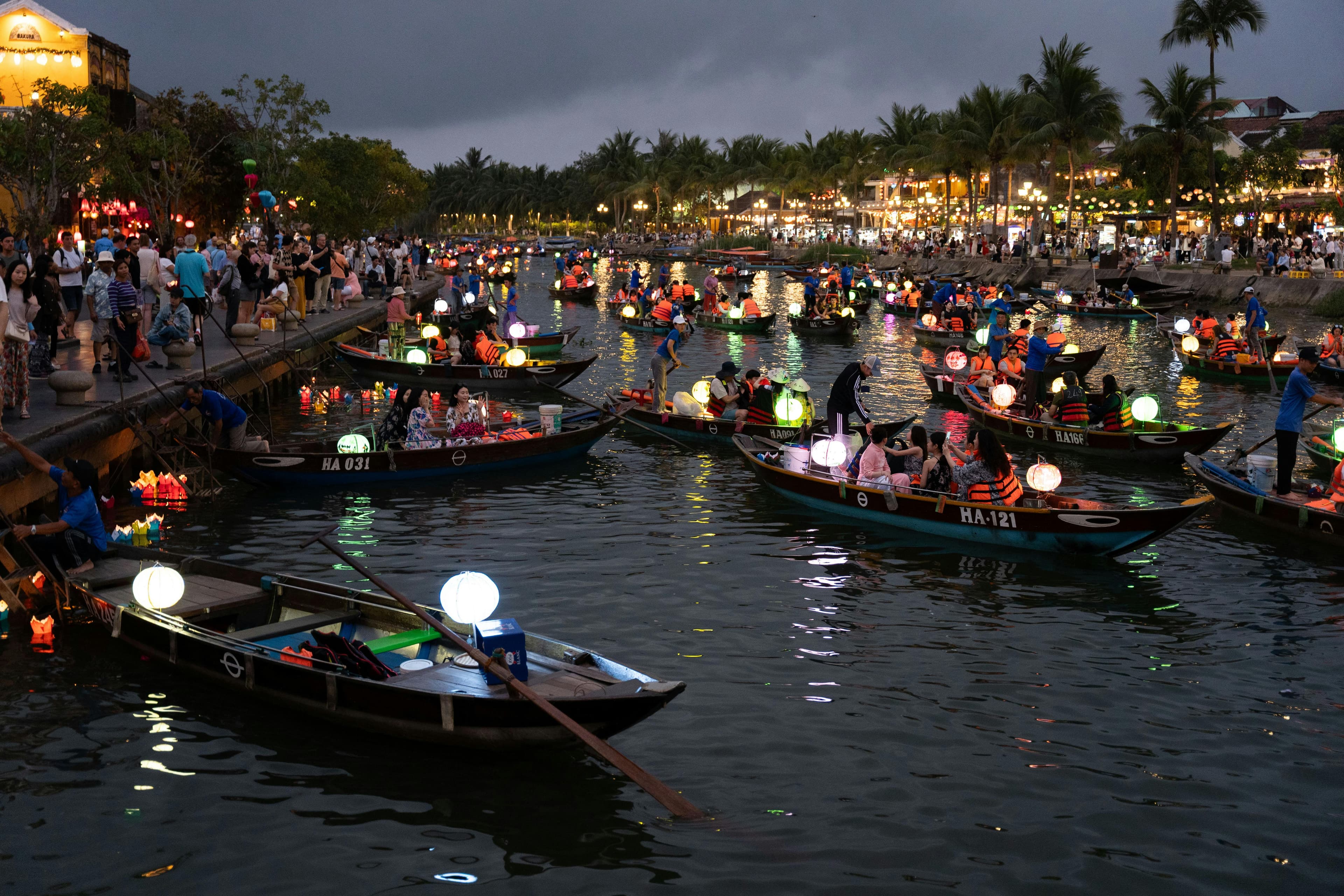
Traditional wooden boats on Thu Bon River with lanterns glowing in Hoi An Old Town at sunset
05
Sunset on the river that built an empire

Thu Bon River Evening Boat Cruise

The Thu Bon River was the lifeline that made Hoi An one of Southeast Asia's most important trading ports for 400 years. This evening cruise takes you along the same river route that carried silk, spices, and ceramics to China, Japan, and Europe. As the sun sets, you'll see why the old merchants built their houses facing the water — and understand how the river's silting in the 19th century ended Hoi An's trading era but preserved its architecture. The cruise includes traditional songs and complimentary drinks as lanterns begin to light up along the riverbank.
Trading Port Heritage
The Thu Bon River connected Hoi An to the East Sea and global trade routes. During the 16th-18th centuries, ships from Japan, China, India, and Europe anchored here to trade silk, tea, ceramics, and precious woods. The river's natural silting saved Hoi An from development — when ships could no longer navigate upstream, trade moved to Da Nang, leaving the ancient town frozen in time. Evening boat rides honor this maritime heritage.
Price
From ~$7 USD
Duration
1.5 hours
Historic trading route · sunset views · traditional songs
Book on GetYourGuide →
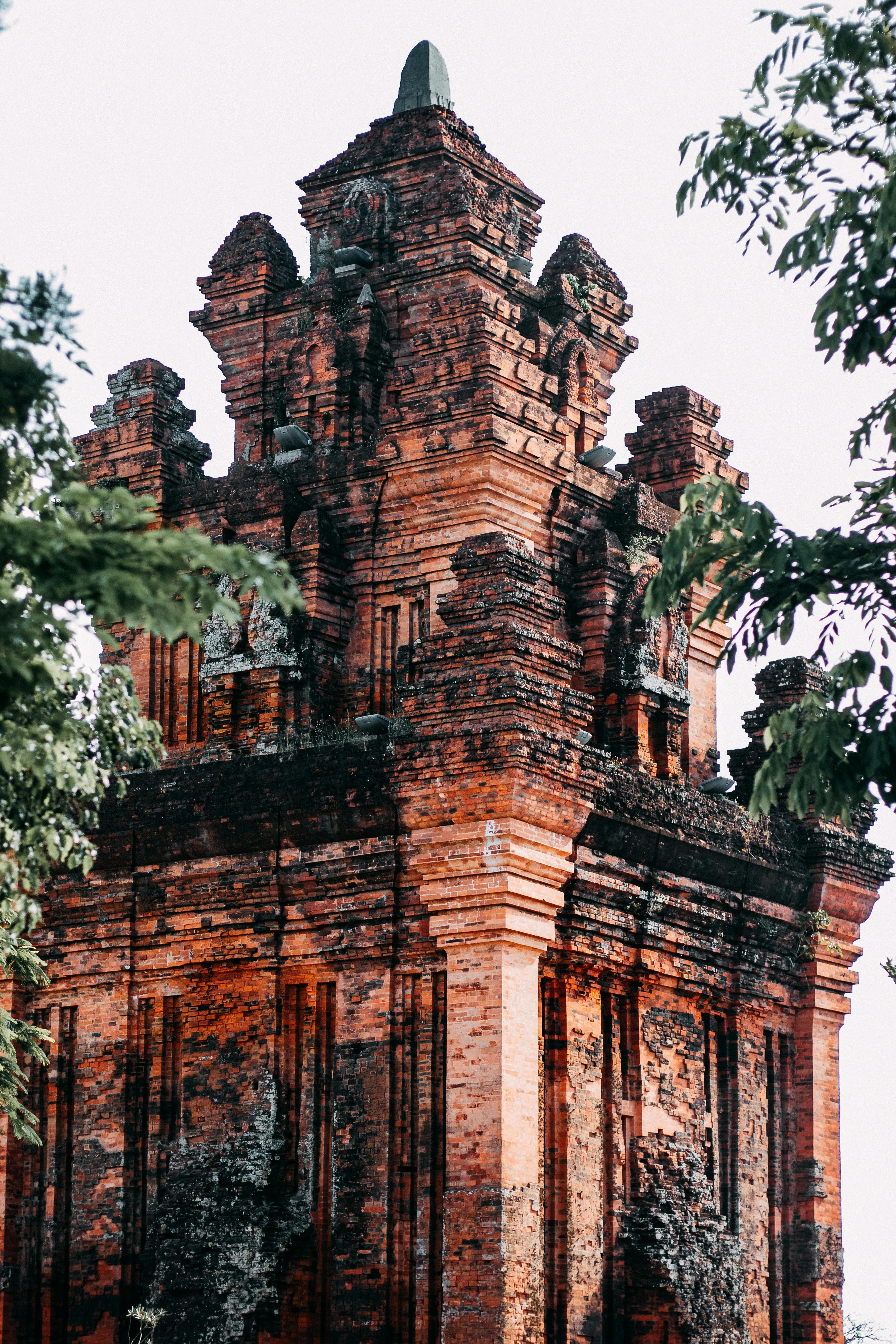
Ancient red brick Cham temple towers at My Son Sanctuary surrounded by jungle in Vietnam
06
Discover the ancient Cham Kingdom temples

My Son Sanctuary Day Trip

My Son Sanctuary, 60km from Hoi An, contains the most important Cham ruins in Vietnam — a complex of red brick Hindu temples dating from the 4th to 14th centuries. This UNESCO World Heritage Site was the spiritual center of the ancient Champa Kingdom that ruled central Vietnam for over 1000 years before Hoi An became Vietnamese. The site has over 70 temples and towers, though many were damaged during the Vietnam War. A day trip from Hoi An includes transport, entrance fees, and a guided tour explaining Cham history, Hindu symbolism, and architectural techniques.

Trading Port Heritage
My Son was the Vatican of the Cham Kingdom — the holiest site of the Hindu Champa civilization that controlled maritime trade before Vietnamese expansion. The towers were built without mortar using a lost technique that fired the structures like pottery, creating incredibly durable buildings. Each temple complex honored different Hindu deities, particularly Shiva. The Cham people established Hoi An as their major trading port, making this day trip essential for understanding the town's pre-Vietnamese origins.
Price
From ~$17 USD
Duration
Full day
UNESCO Cham ruins · 4th-14th century temples · Hindu symbolism
Book on GetYourGuide →
Turquoise waters and coral reefs at Cham Islands marine reserve near Hoi An
07
Marine protected area & UNESCO Biosphere Reserve

Cham Islands Snorkeling Day Trip

The Cham Islands (Cu Lao Cham), 15km off Hoi An coast, are a UNESCO Biosphere Reserve protecting one of Vietnam's best coral reef ecosystems. This uninhabited archipelago of 8 islands offers snorkeling among 165 coral species and 202 fish species — including angelfish, parrotfish, and reef sharks. The day trip includes speedboat transport, snorkeling gear, fresh seafood lunch on Bai Chong Beach, and time to explore the islands' hiking trails. The marine park entrance fee is included. Best visibility is February to August during calm sea conditions.

Trading Port Heritage
The Cham Islands have protected Hoi An's coastline for centuries and played a crucial role in the trading port's maritime activities. Ancient Cham traders used these islands as navigation markers and shelter during storms. The islands' isolation preserved rare bird species and traditional fishing communities. Local fishermen still practice sustainable fishing methods passed down through generations. The UNESCO designation in 2009 recognized both the marine biodiversity and the cultural heritage of traditional island life.
Price
From ~$18 USD
Duration
Full day
UNESCO Biosphere · 165 coral species · fresh seafood lunch
Book on GetYourGuide →

Where to Stay

Find Your Hotel in Hoi An

Stay in the Ancient Town for walking access to temples, or choose beachside resorts for relaxation after cultural exploration.

Search Hotels on Booking.com →

Not Sure Where to Go in Vietnam?

Hoi An offers 2000 years of trading port heritage and UNESCO temples — but Hanoi, Ho Chi Minh City, and Thailand each provide completely different experiences. Let our AI compare them based on your travel style.

Try the AI Decision Engine →